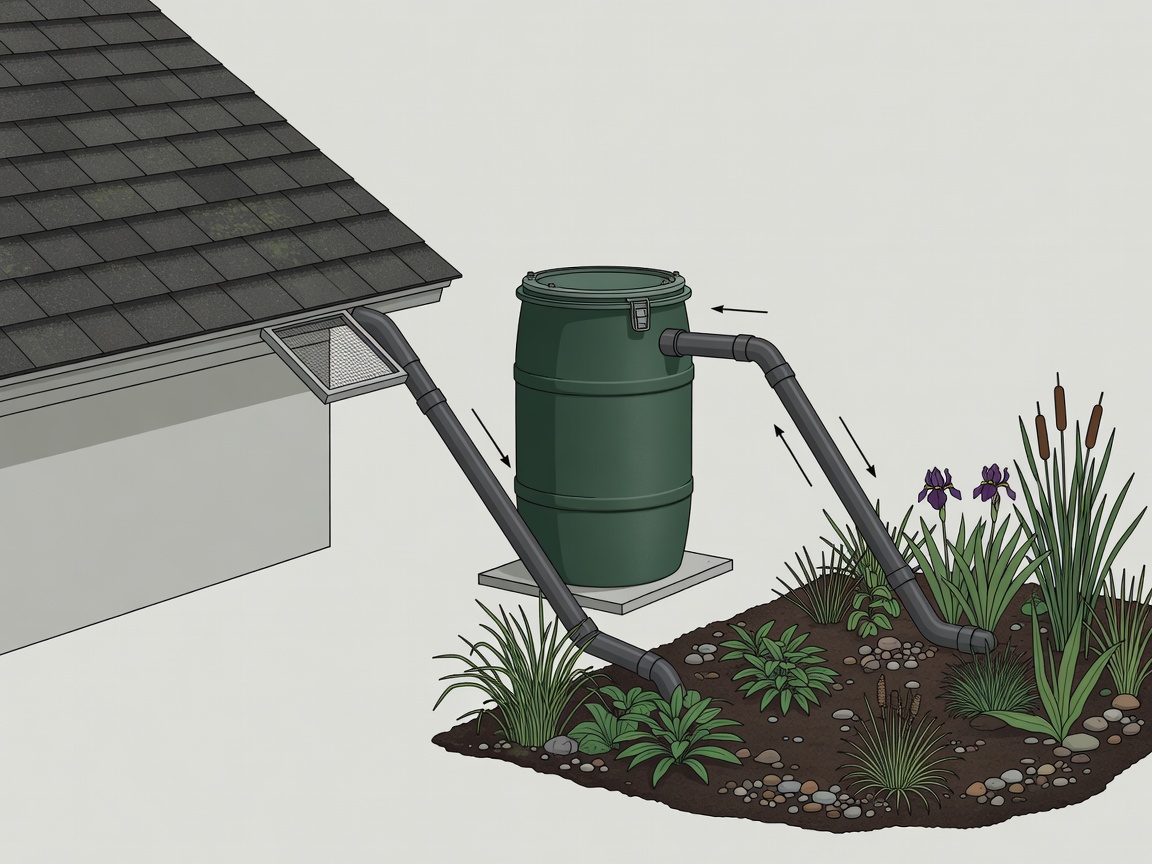
What a barrel can—and cannot—do
A rain barrel can store a limited amount of roof runoff for later landscape watering. It is not a flood-control system, and a full barrel captures no additional water unless an outlet creates space. Plan an overflow that still works during a larger storm, and keep the normal drainage route functional.
Use a container designed for the purpose, with a secure lid and screened openings. Water is heavy: the support must be level, stable and suitable for the full load. Prevent child access and avoid a raised installation that could tip. Follow manufacturer instructions and local requirements.
Roof runoff is not drinking water. Roofing materials, wildlife waste and airborne contaminants affect water quality. Avoid misting it around people and seek local public-health guidance before using it on edible crops. Never connect a barrel directly to a potable supply without required approved protection.
Make maintenance part of collection
Inspect gutters, screens, valves and overflow connections throughout the season. Remove debris before it blocks flow. A damaged screen can create mosquito access; eliminate standing water in unintended containers and follow local vector-control advice if mosquitoes appear.
In freezing climates, winterize the system according to its design. Drain and disconnect equipment that is not rated for freezing, and restore a safe downspout route. An empty container left connected can refill and freeze. Recheck the system after winter rather than assuming every fitting remains sound.
Place storage near a realistic use. If carrying water across the yard is difficult, a barrel may remain full while a hose supplies the beds. Convenient, safe access matters more than collecting the largest possible volume.
Let suitable ground receive water
A rain garden is a shallow planted feature designed around incoming runoff, soil infiltration and a safe overflow. It is not simply a wet depression filled with attractive plants. Assess soil, groundwater, nearby foundations, wells, septic systems and underground utilities before choosing a location.
A basic infiltration observation can help screen a site, but it does not replace professional testing or design where required. Poor drainage, contaminated fill or unstable slopes may rule out infiltration. Local watershed districts and soil and water conservation districts often provide region-specific guidance.
Choose plants for the actual wetting and drying pattern. A rain garden can dry between storms; permanent wetland plants may not suit its upper edges. Keep inlet areas clear and inspect for sediment that can smother plants or reduce capacity.
Understand the path beneath the path
Permeable paving is a system, not just a surface. Water moves through joints or porous material into a designed stone base, then into suitable soil or an approved drainage outlet. Ordinary gravel over compacted, poorly draining ground may still shed or pond water.
Design depends on soil, slope, loading, accessibility, winter conditions and local standards. Paths used by wheelchairs, walkers or strollers need a firm, stable and appropriate surface; loose stone may not meet that need. Confirm the whole route rather than evaluating appearance alone.
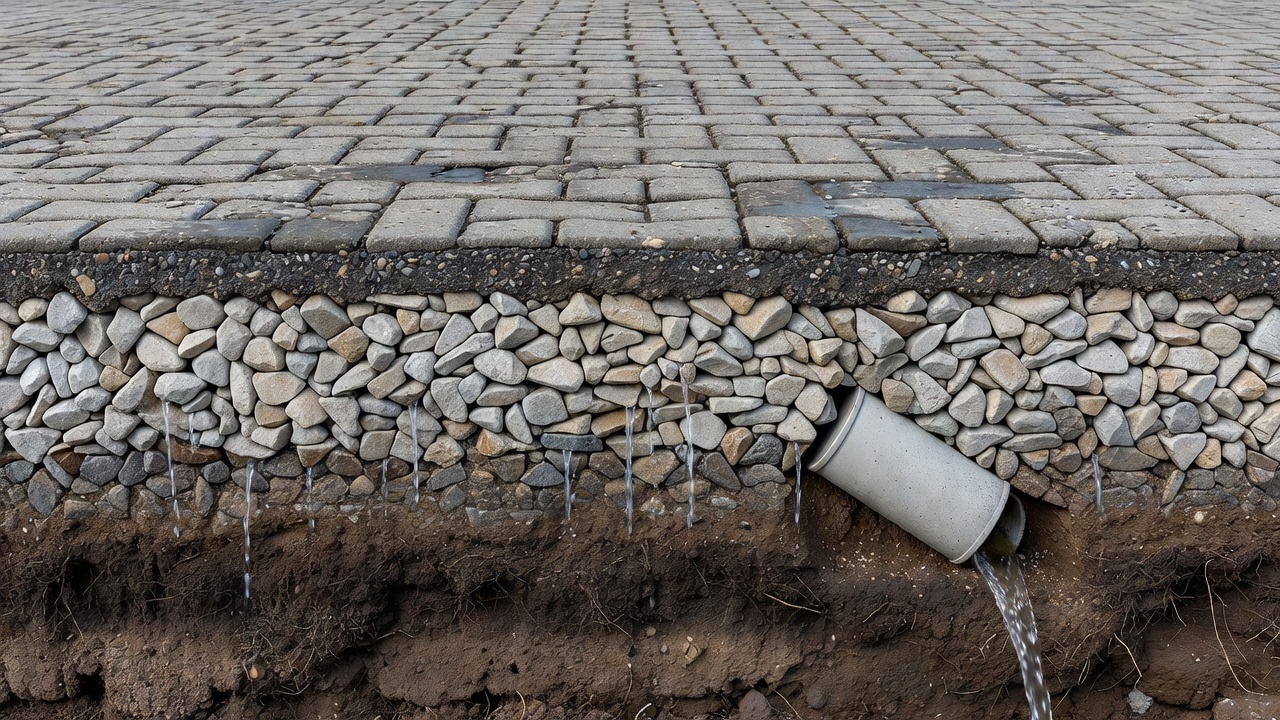
Protect performance over time
Keep soil, mulch and fine sediment from washing onto permeable surfaces. Clogged joints can turn a draining path into a runoff source. Follow the pavement supplier's cleaning guidance; maintenance may require suitable vacuum equipment rather than sweeping alone.
Consider snow removal and deicing before installation. Sand can clog permeable joints, while inappropriate equipment may damage the surface. Chloride affects soil, plants and waterways, so use locally recommended winter practices and prevent unnecessary application.
After an intense storm, inspect inlets, edges and overflow routes. Small erosion channels or displaced mulch are useful evidence that flow is more concentrated than expected.
Choose the smallest useful intervention
Sometimes fixing a leaking gutter or extending an existing outlet along an approved route is more useful than installing storage. Sometimes reducing unnecessary paving offers a better long-term result. Compare maintenance, access and failure consequences as well as initial cost.
For Minnesota projects, start with the Minnesota Pollution Control Agency's stormwater resources and your local authority. Contact Gopher State One Call before digging and follow its procedures; utility location does not by itself approve a drainage design.
Work in stages. Observe the first change through several storms before adding the next. A functioning landscape gives you evidence, not just a finished photograph.