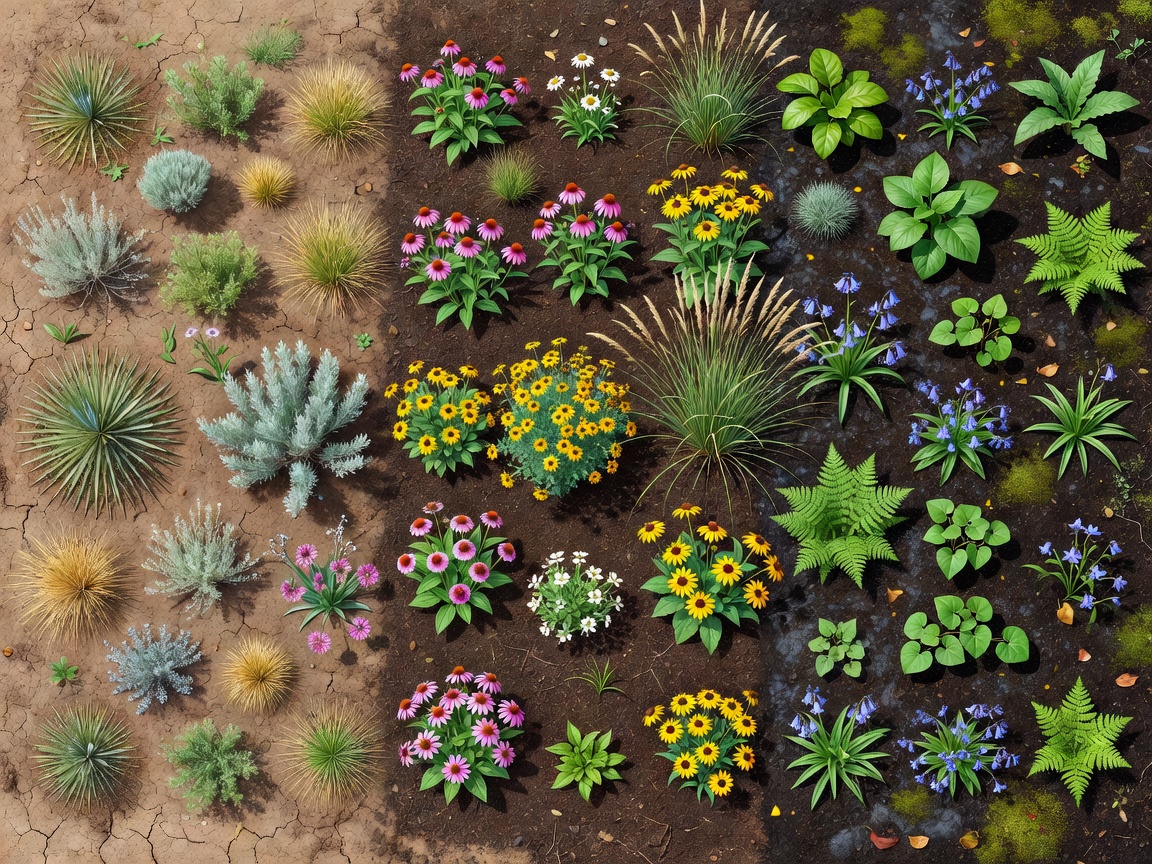
Distinguish native from drought-tolerant
Some native plants grow in wetlands and need reliable moisture. Some nonnative plants tolerate drought but provide different habitat benefits or may become invasive. Ask two separate questions: is this species appropriate to the local ecosystem, and will it thrive under the site's actual water conditions?
Use the Minnesota Department of Natural Resources for regional habitat context and University of Minnesota Extension for cultivation guidance. The USDA PLANTS Database can help check distribution, but broad maps do not establish that a plant is locally indigenous. Confirm scientific names because common names can refer to several species.
Check current Minnesota invasive-species guidance before purchasing unfamiliar plants. A label saying “wildflower” or “pollinator mix” does not establish local suitability or seed quality.
Build a community, not a collection
Choose a modest palette of compatible species and repeat them. Combine grasses or sedges with flowering perennials that offer different bloom periods. Leave enough room for mature width, and avoid placing a vigorous spreader beside a slow, small plant that cannot compete.
For a small yard, a clearly edged bed near an existing path may be easier to establish than scattered planting pockets. Preserve healthy existing vegetation where it serves a useful function. Converting everything at once can create weed pressure, exposed ground and more watering than you can manage.
Include maintenance access. A stepping route lets you remove weeds and inspect young plants without repeatedly compacting their root zones.
A starting comparison, not a shopping prescription
These species occur natively in Minnesota, but local distribution and site fit vary. Check your county, seed origin and available moisture before choosing. Descriptions refer to typical established preferences, not guaranteed survival.
| Species | Typical setting | Useful caution |
|---|---|---|
| Little bluestem Schizachyrium scoparium | Sun; dry to medium, well-drained soil | Avoid persistently wet ground; excessive fertility can encourage flopping. |
| Prairie dropseed Sporobolus heterolepis | Sun; dry to medium prairie conditions | Slow to establish; allow room for the mature fountain-shaped clump. |
| Butterfly milkweed Asclepias tuberosa | Sun; well-drained, often dry soil | Not a substitute for wet-site milkweeds; avoid repeated transplanting. |
| Wild bergamot Monarda fistulosa | Sun to light shade; dry to medium soil | Allow airflow and spread; foliage may develop powdery mildew. |
| Pennsylvania sedge Carex pensylvanica | Part shade to shade; dry woodland conditions | Not a durable replacement for frequently walked lawn. |
| Swamp milkweed Asclepias incarnata | Sun; moist to wet soil | A native example that should not be treated as universally drought-tolerant. |
Prepare and establish patiently
Identify existing weeds before removing vegetation. Persistent perennial weeds need a control plan; covering them with a thin layer of mulch rarely solves the problem. Choose a preparation method suited to the weeds, slope and season, and avoid disturbing tree roots.
Water new plants according to root-ball moisture and surrounding soil, not the word “native” on the label. Keep crowns at the appropriate level, avoid burying stems and inspect for frost heave or animal disturbance. Seeded plantings often look sparse while roots develop; learn to recognize seedlings before weeding.
A thin, appropriate mulch may help a planted bed, but deep mulch can suppress desirable seedlings and cover ground-nesting habitat. Adapt the surface treatment to the planting method.
Manage for habitat and people
Observe the planting through a full season. Mark weeds before they set seed, replace failures only after investigating the cause and keep sightlines and walkways clear. Leaving selected stems and leaves can support insects, but placement should respect drainage, safety and neighborhood requirements.
The Xerces Society offers pollinator habitat resources that complement local horticultural advice. Avoid routine pesticide use; first identify the organism and whether damage actually threatens plant health. A few chewed leaves may be part of the habitat you intended to create.
Photograph the same view each month. A simple record of bloom, bare ground and watering helps you adjust plant spacing and composition without relying on memory.