Read stress without guessing
Wilting can result from dry roots, saturated soil, root damage or temporary midday heat stress. Adding water automatically can worsen an oxygen-starved root zone. Check moisture and drainage before deciding that a plant needs more irrigation.
A hand assessment is useful when done consistently: examine soil at a depth relevant to the current roots and compare locations. Low-cost moisture meters can be influenced by soil conditions, so do not treat a single reading as an unquestionable instruction.
Keep a rain gauge in an open, representative location. Rainfall at a distant weather station may not describe your yard, and water intercepted by a dense tree canopy may not reach plants beneath it evenly.
Group similar needs together
Hydrozoning means placing plants with similar water needs on the same irrigation zone or within a manageable watering group. A new vegetable bed, an established native border and a shaded lawn should not share a schedule simply because they are close together.
Within a planting, pay attention to differences in soil and exposure. A south-facing edge beside paving may dry faster than the center of the bed. Correct the underlying design where possible rather than increasing irrigation everywhere to satisfy the driest corner.
Separate temporary establishment watering from the long-term plan. Removable drip lines or careful hand watering may suit a small new bed without committing the whole yard to permanent equipment.
Deliver water where roots can use it
Drip irrigation can limit overspray and deliver water near plants, but it is not automatically efficient. Emitters need appropriate spacing, flow, filtration and pressure regulation. A hidden leak or clogged outlet can waste water or leave a plant dry while the system appears to be working.
Soaker hoses vary in output along their length and with pressure. Observe the wetting pattern rather than assuming the entire bed receives the same amount. For larger or permanent systems, seek design advice that accounts for elevation, zone flow and required backflow protection.
Sprinklers can be suitable for some turf and seeded areas. Keep spray off buildings and hard surfaces, use compatible heads within a zone and avoid watering in windy conditions. Inspect operation while the system is running.
Adjust time to infiltration
Water that runs down a path is not serving the intended roots. Clayey, compacted or sloping ground may accept water slowly. Where appropriate, dividing application into shorter cycles with soak intervals can reduce runoff, but this does not repair a drainage problem or justify applying more water overall.
Sandy soil often stores less plant-available water than finer-textured soil. New, shallow roots may require smaller, more frequent checks than an established planting. Avoid blanket instructions to “water deeply once a week”; depth and frequency need to match the actual roots and soil.
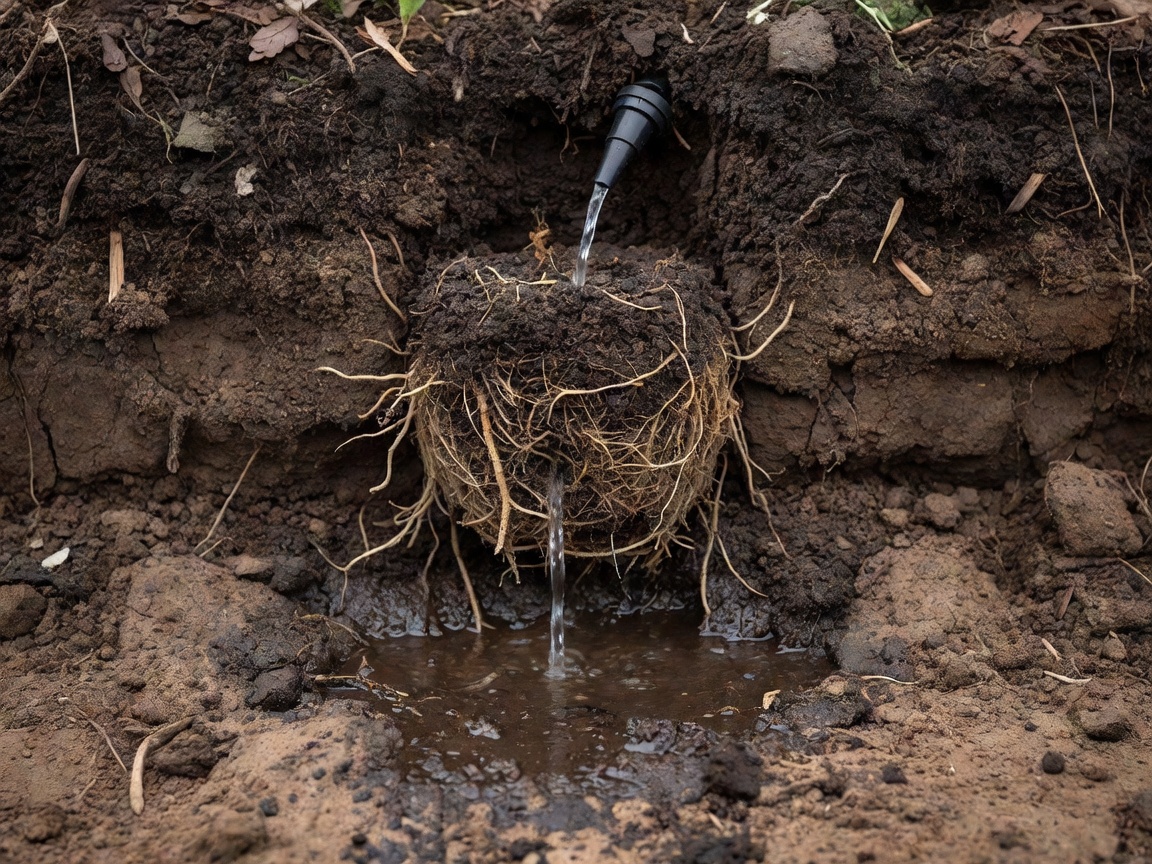
After watering, check the wetted area. If the root ball remains dry or water bypasses it, adjust placement and delivery rather than extending run time blindly.
Let weather change the schedule
Rain sensors and suitable weather- or soil-based controllers can reduce unnecessary operation when correctly installed and maintained. They still need sensible settings and periodic review. EPA WaterSense provides information on labelled irrigation controllers and other water-efficient equipment.
Follow local watering restrictions, drought notices and seasonal guidance. The U.S. Drought Monitor provides regional context, while NOAA weather information can help with planning. Neither replaces observation of your own soil or the rules of your water supplier.
Morning watering is often practical when sprinklers are needed because wind may be lighter and foliage can dry during the day. Local restrictions, disease concerns and delivery method can change the best timing.
Maintain, then reduce dependence
At seasonal start-up, check valves, connections, emitters, sprinkler alignment and controller settings. Look for unusually wet patches and unexpected meter use. Reinspect after digging, mowing damage or changes to the planting. An automatic system should not become an invisible one.
In freezing climates, winterize equipment using the method appropriate to its design. Pressurized blowouts can be hazardous and may require trained help. Protect the potable water supply and follow local requirements for backflow devices and testing.
Finally, use what you learn to improve the landscape itself. Better plant placement, protected soil and reduced unnecessary turf can lower long-term irrigation demand. Efficiency is valuable; avoiding a recurring need where practical is better still.